

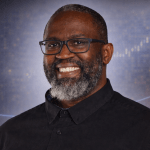


Anirudh Singh Chohan came off the Common S3nse stage, sat down opposite me with his backpack still in his hand, and gave me the line I have not stopped turning over since: right now the code breakers seem to be ahead. He is Head of Marketing at the Safe Foundation, the non-profit behind the Safe smart accounts that have become one of the dominant venues for DAO and treasury self-custody on Ethereum and EVM chains. What he described to me is arithmetic rather than fear. One person with a little compute can now assemble an attack that used to take a team.
| What you need to know |
|---|
| 1Chohan is Head of Marketing at the Safe Foundation, the non-profit behind Safe smart accounts. Safe's own site, as published in September 2026, reports more than one trillion dollars in volume processed, over 57 million wallets deployed and more than 60 billion dollars in value secured. |
| 2His central claim: AI has pushed the cost of an attack down far enough that a few individuals with a bit of compute and uncensored open source models can stitch an attack together end to end. He counts about 116 tech companies signing open letters asking for the worms to go back in the can. |
| 3His answer is cryptographic primitives, distributed consensus and economic accountability, packaged as SafeNet, a defence protocol for multisigs with an open market of transaction checkers he calls sentinels. |
| 4My read: the asymmetry argument is the part that survives outside a conference hall. Whether anyone can pay defenders enough to show up is the open question, and it is the one I would watch. |
The full conversation runs fourteen minutes.
The cost of an attack has come down
I asked him what defence we are supposed to mount against the thing he had just spent his stage time describing, which he calls offensive and orchestrated AI. He started with the industry’s own alarm rather than with his product.
If you look at what’s going on, if you just read the news, we have about 116 tech companies banding together, writing open letters saying, hey, we need to put the worms back in the can. This is getting crazy.
Anirudh Singh Chohan
That is his count, and it points at a real pattern: the people who build these systems keep signing letters asking someone to slow the thing down. What interests me more is the sentence he reached for next, because it explains why a security person at a wallet company is talking about model releases at all.
It’s about leverage. Few people with limited resources using AI are leveraged to create sophisticated threats. That’s new. That’s what’s not happened before.
Anirudh Singh Chohan
Think about what leverage means in an attack economy. For most of this industry’s history, a serious exploit needed a serious crew: someone to find the bug, someone to write the tooling, someone to launder the proceeds, and enough time between them to make it worth the risk. Every one of those steps carried a salary and a coordination cost, and those costs were the reason the number of capable attackers stayed small.
One or a few individuals can use a bit of compute in their hand and some open source models that are completely uncensored to cook up these attacks. So that’s new. That’s happening now.
Anirudh Singh Chohan
Take him at his word on the mechanism and the consequence follows on its own. If the crew shrinks to one and the tooling is a download, the population of people who can plausibly come after a wallet stops being a handful of specialist groups and becomes a much larger number of ordinary attackers. Defence budgets were sized for the old population.
Right now the code breakers are ahead
He put the whole thing in a frame that is older than any of the technology involved. Cryptography has always been two crafts pulling against each other, and the balance moves.
Right now the code breakers seem to be ahead. And hey, we need hardening. We need defensive protocols to be built to be able to defend self-custody.
Anirudh Singh Chohan
Be precise about what has got cheaper, because it is the assembly of an attack rather than the mathematics underneath it. The phishing page, the tooling around a known weakness, the operational glue that turns a vulnerability into stolen funds: those are the steps a model can now do most of. The signatures themselves still hold.
The word doing the work in his answer is hardening. It is not a slogan in his mouth. It means shipping something that assumes the attacker has better tools than you do, and building the checks on the assumption that a signature request in front of a user may already have been shaped by something smarter than the user. That is a different design brief from the one most wallet software was written to.
I put it to him that self-custody is a hard sell in a year when custodians are regulated, insured and easy. He answered by turning the premise around.
It’s also true that self-custody has never been more valuable, with such geopolitical unrest in the world, self-custody actually matters a lot more.
Anirudh Singh Chohan
Both halves of that can be true at once, and that is the uncomfortable part. The reasons to hold your own keys are getting stronger at the same time as the tooling aimed at those keys is getting cheaper. Anyone telling you to move everything back to an exchange is answering only the second half of the sentence.
His antidote is cryptography and incentives
The obvious move for a security company in 2026 is to answer AI with AI and sell the result. He went somewhere else first.
The antidote to AI abundance of attacks is the defense of cryptographic primitives and consensus and distributed consensus and decentralized consensus and economic accountability.
Anirudh Singh Chohan
Strip the stacked nouns and what he is describing is a bet on the one thing a model cannot argue with. A signature either verifies or it does not. A quorum either forms or it does not. Those properties hold no matter how persuasive the thing on the other end of the wire has become, which is exactly the quality you want when the attacker can generate infinite plausible-looking requests.
So we need to build some crypto economic solutions to these kind of abundance of attacks that we’re seeing.
Anirudh Singh Chohan
I asked how he hears the current round of AGI announcements, the celebratory kind, and whether he takes them as good news. His reply was the most balanced minute of the conversation.
The acceleration of AI also means the acceleration of attacks. Yes, it’s going to cause a lot of human progress. We are convinced of that.
Anirudh Singh Chohan
He is not asking anyone to be against the technology. He is pointing out that the same curve that produces the good demos produces the bad ones, and that only one of those two has a well funded industry building against it.
The Safe Foundation answer: SafeNet and sentinels
Safe’s answer has a name. The Safe smart account is a multisig at heart, and multisigs are where a great deal of DAO and treasury self-custody on EVM chains actually lives, so a defence layer aimed at them reaches a lot of value at once.
We need basically a hardening of defensive protocols for multisigs, and we’re building that with SafeNet.
Anirudh Singh Chohan
The interesting design choice is who does the checking. He does not want a single vendor sitting in front of every transaction, because a single vendor is a single thing to compromise and a single thing to bribe.
We have an open market for sentinels, what we call sentinels, which are these transaction checkers. And it can be anybody who’s contributing in theory.
Anirudh Singh Chohan
Then he closed the loop back to AI, which is where the idea earns its keep. The same models that make attacks cheap also make transaction analysis cheap, and if you pay for that analysis you get a supply of it.
You could build something with AI to kind of check other people’s transactions and earn a fee for that.
Anirudh Singh Chohan
He was clear that accountability has to come with the fee, in his words making sure there is enough for people who say they are defending to have skin in the game. That is the hard engineering, and it is worth being specific about why. Paying for a security opinion is easy. Making that opinion accountable afterwards, so a checker who waves a bad transaction through loses money for it, is the part that decides whether an open market of checkers becomes a real defence or a marketplace of rubber stamps. Safe’s documentation for SafeNet is public, and that mechanism is the section I would read first.
His one takeaway from Common S3nse
I asked what a person should carry home from an event like this one. He gave me something a builder can act on the same evening.
My one takeaway would be it’s a good time to kind of hunker down and start building defensive, because that’s exactly what the world needs right now.
Anirudh Singh Chohan
He also thinks the audience does not need convincing that the threat is real, and he is probably right about that.
This is every day in the news. You can’t kind of tune out of, hey, there are new AI threats. Just yesterday, the state of Berlin had a data breach.
Anirudh Singh Chohan
Awareness has stopped being the bottleneck. Everyone in that room could recite the headlines. What almost nobody has is a paid seat on the defensive side, and that gap between knowing and building is the whole of his argument. His last words to me were the ones I would put on the wall of any security team: it’s going to take all of us.
Frequently asked questions
What is SafeNet?
SafeNet is the defence protocol the Safe Foundation is building for multisig accounts. Chohan describes it as hardening for multisigs, with an open market of transaction checkers he calls sentinels who are paid for reviewing transactions and are meant to carry accountability for the calls they make. Safe publishes documentation for it at docs.safe.global.
Is AI actually making crypto attacks worse?
Chohan’s argument is about cost and leverage. He says the price of mounting an attack has come down and that one or a few people with modest compute and uncensored open source models can now assemble an attack from end to end, which is something he says has not been possible before. The effect he expects is a larger number of capable attackers rather than a new kind of attack.
Should I move my crypto off self-custody because of AI?
That is not what he is arguing. He told me self-custody has never been more valuable, and that geopolitical unrest makes it matter more, while also saying the tools aimed at self-custodied keys have got cheaper. His conclusion is that wallets and protocols need hardening, and that people who can build defences should start now. Nothing here is financial advice.
What is a multisig, and why does Safe come up so often?
A multisig account requires several separate keys to approve a transaction before it executes, so losing one key does not lose the funds. Safe, which started life as Gnosis Safe, is one of the most widely used smart account platforms for treasuries and DAOs on Ethereum and EVM chains, which is why a defence layer aimed at multisigs reaches a lot of onchain self-custody at once.
Read next
- Every Common S3nse 2026 interview in one place, our hub for the conversations we recorded at De Hallen over both days.
- James Walford of Inferenco on AI and crypto, the other conversation from this event about what machine intelligence does to onchain systems.
- Bastien Taquet of Satochip on hardware self-custody, for the device side of the problem Chohan describes in software.
- Our preview of Common S3nse 2026, with the programme and what the event set out to do.
- Safe’s own documentation for SafeNet, including how the protocol is meant to fit around a Safe account.
- The Common S3nse speaker list, where Chohan’s session sits alongside the rest of the day two programme.
- ERC-4337, the account abstraction standard behind much of the smart account work Safe helped make ordinary.
- Anirudh Singh Chohan on X and the Safe Foundation on X.
Recorded at Common S3nse 2026, De Hallen Studio’s, Amsterdam, on 5 September 2026, during Cypherpunk Week. Quotes are verbatim from the recording with filler removed. Cryptofocus is a media partner of Common S3nse. Nothing here is financial advice.


