

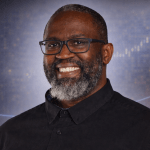



I asked Mahsa Doorfard what she would tell a founder who wants her money, and she needed one breath for the answer. Be transparent, build for the long term, and do not create a token you do not need. Doorfard is sales and marketing manager at coinIX, a Hamburg firm that invests in blockchain start-ups, and we sat down at Kokerei Hansa on the second day of CONF3RENCE, the day she moderated a panel on liquidity, market structure and exchanges.
| What you need to know |
|---|
| 1coinIX is a blockchain venture capital firm from Hamburg, active since 2017, whose own shares trade in Germany under ISIN DE000A2LQ1G5. |
| 2Doorfard describes venture capital as an adventure with danger built in, which is why coinIX gets to know a team in person before it invests. |
| 3Her checklist starts with a doxxed, transparent team and real users; a token without a clear use is a reason for her to walk away. |
| 4My read: in a quiet market, a VC that says no to unnecessary tokens is telling founders exactly where the bar sits. |
The full conversation runs just over 11 minutes.
A bridge her parents can use
I opened by asking how a blockchain VC explains itself in Germany. Doorfard laughed at the question first, because the problem starts at home: blockchain is not a tangible concept, and “still my parents doesn’t really understand what exactly I do”. What coinIX is trying to build, she said, is a bridge between traditional finance and digital assets for people who are not tech savvy.
coinIX GmbH & Co. KGaA is a listed company, and its shares trade in Germany. According to its management page, the investment arm is coinIX Capital GmbH in Hamburg, run by Moritz Schildt, and the portfolio spans equity stakes, token agreements and liquid crypto assets in Germany, the rest of Europe and beyond.
Read the thread on X
Venture capital comes from adventure
Projects in this market appear overnight and vanish overnight, so I asked how coinIX decides what deserves its capital. Her answer started with the word itself.
We say venture capital, it comes from adventure. That means we all know that there is a danger involved.
Mahsa Doorfard, Sales and Marketing Manager, coinIX
Then she gave me the arithmetic that every early-stage investor lives with and few say on camera: “maybe from the 10 investments that we do maybe eight will go down”. One or two successes in the portfolio, she said, make that okay. The work goes into moving those odds, and most of it happens before any money moves.
The team behind the project is very important for us. So we usually try to get to know the team in person. That’s why we are in conferences.
Mahsa Doorfard
For a founder walking the halls at an event like this one, that changes the order of things. The pitch deck is the second meeting. The first is the conversation at the coffee bar, and the investor is already weighing the person.
Doxxed teams and real users first
I asked for the one or two things she looks for right now. Reputation came first. She sees crypto projects that are cool on paper, “but they don’t have a doxxed team”, and anonymity counts against them. A team that has already built something successful starts with a much better chance on its next project, so coinIX looks at what the founders did before.
The second filter is traction, and here she had the current mood in her sights. Wrapping a project in a story about AI and blockchain is easy, she said, and everybody has a plan for what they are going to build.
But the real question is who has actually built something. What do you have to offer now?
Mahsa Doorfard
Something people can actually use, with real users behind it, is what moves a project up her list. That is a simple test, and it filters out a large share of what reaches a VC inbox in 2026.
Once coinIX invests, it stays close without taking over. Doorfard described help with partnerships through its network, cloud credits with AWS, advertising and consultancy, while the founders run their own company. Where coinIX is fully hands-on is its own infrastructure: she told me the company runs everything it needs for Ethereum native staking in-house, and its Ethereum page describes staking as one of the portfolio’s extra income sources.
Why she likes a quiet market
I asked why events matter to a firm that has no product of its own to sell. Her answer turned the mood of the market into an argument for being in the room. There are fewer people at conferences in this bear-market/" data-term-title="Bear Market" role="button" tabindex="0">bear market, she said, and she prefers it that way.
That’s actually what I love because it means the hype is gone. The people who were following the speculation are gone. So everyone who is here at the moment, they are the real builders.
Mahsa Doorfard
For an investor, a thinner crowd is a better signal. The people still showing up when prices are down are the ones she might back, or build something with later, and she called those connections really important in this industry.
I pushed on the harder side of the question: how does a project stay relevant when most will not make it? She did not pretend that good work guarantees survival. Timing and luck play their part, and she has watched honest teams fail.
Sometimes I really see projects that were not scams. They were actually creating value and they were offering something really good, but they don’t make it.
Mahsa Doorfard
Her advice was to spend on long-term value instead of on marketing for short-term hype. The quality she rates most in a project is time survived.
One of the things that I really like about a project is when they survive multiple market cycles, multiple bear market and bull-market/" data-term-title="Bull Market" role="button" tabindex="0">bull market.
Mahsa Doorfard
AI agents, and a token you do not need
When I asked which recent bet excites her, she named a young company working where AI and blockchain meet, and she was measured about how far that combination has come.
We can now see AI agents doing trading, doing portfolio management and everything. We are probably not ready for the huge retail use in the public, but we are in the right direction.
Mahsa Doorfard
Then came my last question, the one every founder at Kokerei Hansa should have heard: what is her single piece of advice for a project looking for funding?
Be transparent, try to create long-term value, and don’t create a token if you don’t really need it.
Mahsa Doorfard
She sees many projects that simply want a token. Go through the utilities, she said, and you often find it is “more like a marketing thing”. When a token brings no specific value, her decision is quick: she does not invest.
That lands differently coming from an investor who also holds liquid tokens. A token is a tool she is happy to own when it does a job. The founder who adds one to look fundable is showing her the opposite of the transparency she asks for. The question worth taking away from Dortmund is simple: if your token disappeared tomorrow, would your product still work?
Read next
- Where the risk sits: CONF3RENCE 2026 in thirteen interviews, our complete article on the thread connecting all thirteen conversations.
- All our CONF3RENCE 2026 interviews, added as each conversation from Kokerei Hansa goes live.
- SwissBorg CEO Cyrus Fazel on what AI changed, including his case for crypto that makes sense over quick returns.
- Deloitte’s Alireza Siadat on tokenisation that pays, the institutional side of the same market.
- Our CONF3RENCE 2026 preview, written before the doors opened.
- Mahsa Doorfard on LinkedIn, her profile on women in blockchain VC, and coinIX at coinix.capital and on X.
Recorded at CONF3RENCE 2026, Kokerei Hansa, Dortmund, on 16 September 2026. Quotes are verbatim from the recording with filler removed. Cryptofocus is a media partner of CONF3RENCE. Nothing here is financial advice.


