



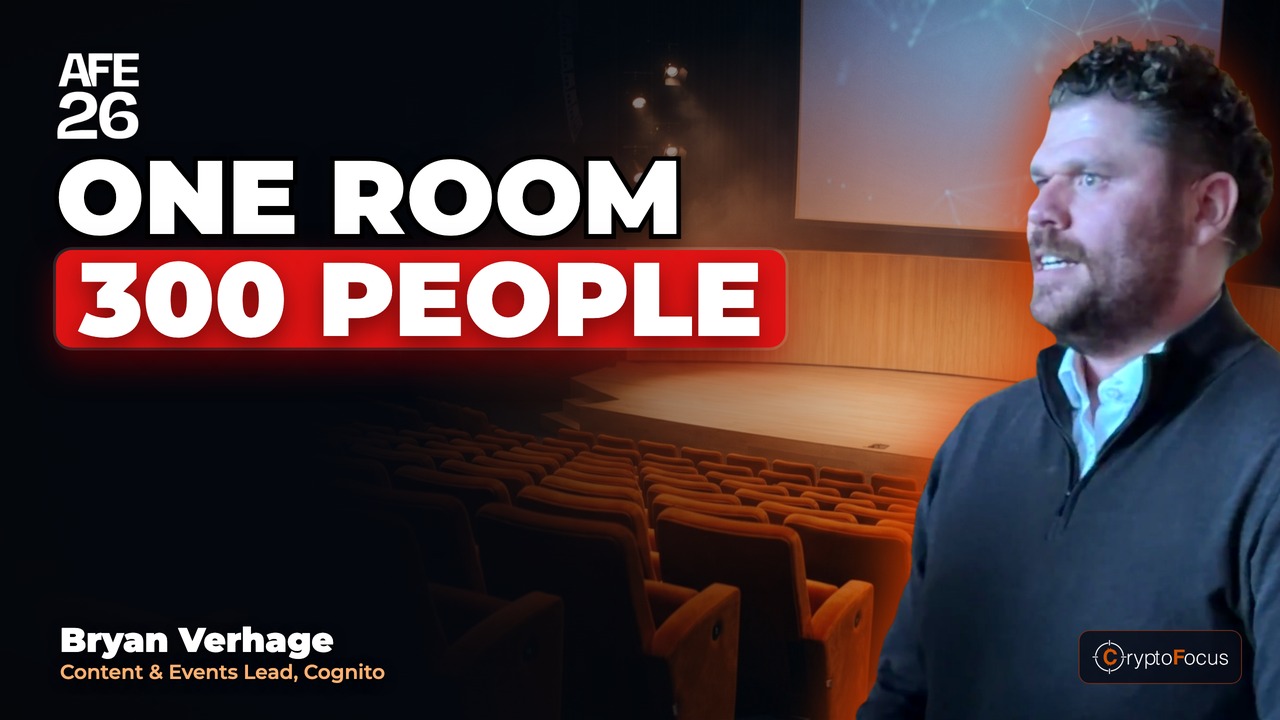

Last week Rosalie Suurmeijer of Cognito walked me through the World Trade Center Amsterdam. When I asked her who could explain what visitors will actually hear at Amsterdam Fintech Event 2026, she said: talk to Bryan. So on Tuesday I went back to meet Bryan Verhage, Content & Events Lead at Cognito, which organises AFE26 with the Holland Fintech Association. His team briefs the speakers and moderators, and he told me how the programme is put together.
| What you need to know |
|---|
| 1AFE26 runs on 7 and 8 October at the World Trade Center Amsterdam under the theme building the new financial infrastructure. Tickets cost €175 for one day or €250 for both. |
| 2Cognito holds one-on-one calls with speakers and especially moderators, Bryan says, so that some 30 sessions stick to their own topic instead of drifting to AI. |
| 3Agentic AI gets paired with another subject, such as the human side of banking. |
| 4Mastercard opens day two and runs its Mastercard for Fintechs pitch competition. Visa opens day one, followed by sessions on digital assets and stablecoins. |
| 5My read: the size is the selling point. With about 300 visitors over two days, according to Bryan, you can get to most of the people you came for. |
This is our full conversation, from the foyer to the auditorium where most of the programme will happen.
A big theme, cut into parts
This year’s title is Building the New Financial Infrastructure. That could mean almost anything, so Cognito split it into themes a visitor can follow. Bryan highlights AI, and the agentic side of it in particular, then digital assets, tokenisation and stablecoins, and trust and compliance, from MiCA and PSD to open banking. The official line-up has five themes: agentic fintech; next-gen payments; stablecoins, tokenisation and digital assets; embedded and invisible finance; and fintech in a regulated world.
So we decided to implement the sub-themes to make the main theme a lot more explainable, basically for people who don’t know much about the financial infrastructure.
Bryan Verhage, Content & Events Lead, Cognito
How some 30 sessions stay on topic
About 60 speakers are on the programme. Bryan’s team holds one-on-one calls with them, and especially with the moderators, and helps brief every session in detail. With some 30 sessions over two days, the reason is simple:
If everyone doesn’t stick to that topic, there’s going to be a lot of overlap.
Bryan Verhage, Content & Events Lead, Cognito
He has seen the same thing at many events: whatever a session is called, the discussion drifts to AI. Briefing the speakers and keeping each session within its lines is how he wants to prevent that at AFE26.
Agentic AI, paired with something else
AI agents are software that can carry out tasks on their own, and they are everywhere this year. Bryan’s answer is to give agentic AI a second subject:
At the Amsterdam Fintech event, we mostly try to link agentic AI together with another topic.
Bryan Verhage, Content & Events Lead, Cognito
Booking a flight is no longer the interesting part, he says. Ask the agent in an innovative expense tool to book you a flight to Amsterdam for 7 and 8 October and it will. The more interesting question is what agentic AI changes in something that matters, and his example is a session on agentic AI in banking and its human side. On the published programme, the session with agentic in its title is Agentic Banking: Prepare to adapt or be ready to die, powered by Akkuro, on 7 October at 15:45.
Regulation, with the builders in the room
For trust and regulation, Cognito brings three groups together: law firms, compliance people from fintech companies, and the providers that sell software for compliance. His example is Projective Group, and the point he makes with it is about regulation technology, or RegTech.
Many people don’t actually know, but regulation technology is also part of FinTech, right? So how do we use technology to implement regulations?
Bryan Verhage, Content & Events Lead, Cognito
On the programme, Projective Group powers FEC at the Crossroads: Data, AI and Executive Decision-Making on 7 October at 13:15. Baker McKenzie hosts a session on fintech financing that afternoon at 14:55, and on 8 October at 13:15 a breakout asks whether the EU AI Act drives innovation through trust.
What Mastercard and Visa bring
I asked how two of the biggest names in payments stay relevant to a room of 200 people. Both run programmes for young companies, Bryan says, and Mastercard builds its programme at AFE26 around them:
The whole Mastercard program at the Amsterdam FinTech event is all about FinTechs.
Bryan Verhage, Content & Events Lead, Cognito
Mastercard opens 8 October at 09:30. Its Mastercard for Fintechs pitch competition runs in two rounds, with two fintechs at 10:45 and three at 11:25, and the winner is announced at 12:20. Visa opens 7 October at 09:30, followed by a talk on how digital assets are reshaping payments and a panel on scaling stablecoin use cases in Europe. Visa’s part, Bryan says, is “mostly going to be around stablecoin, crypto”, with crypto leads flying in, “because they see the importance of being one of the first.” I wrote about the stablecoin sessions in Is the euro stablecoin moment here?
Europe’s scale problem
Qivalis, the company through which European banks plan to issue a euro stablecoin, is on the programme through Money20/20: its CFO Floris Lugt speaks on 8 October at 15:35. For Bryan, Qivalis is one of many innovative European ideas. Europe has no shortage of them, he says. Scaling them is the hard part:
But then scaling these opportunities with capital, the right people, and the right solutions is the most difficult part.
Bryan Verhage, Content & Events Lead, Cognito
Why it all happens in one room
The auditorium seats about 200 people, and most of the plenary programme happens there. In the afternoons there are breakouts for groups of 10 up to about 50. No hall full of stands, and that is on purpose:
One of the main reasons we chose to do so is because we value one-on-one connections.
Bryan Verhage, Content & Events Lead, Cognito
Meeting people in person rather than in a video call is the mantra of the Holland Fintech Association, he says. With a maximum of 300 unique visitors over two days, you can meet most of them. Here is that part of our conversation in a minute and a half.
Asked what he looks forward to most, he mentions an edition that may sell out for the first time, and one scene in particular: a large company sitting down with a small one that solves a niche problem, such as a Mastercard executive meeting a founder with a payment solution for hospitality in Europe.
I’m looking forward most, I think, to seeing the incumbents meet with the innovative small people.
Bryan Verhage, Content & Events Lead, Cognito
If you have not seen it yet, this is the promo we made for AFE26, cut from last year’s crowd and this year’s empty auditorium.
What I would ask at AFE26
- At the Akkuro session on agentic banking, 7 October at 15:45: which agentic use case is already running in a bank, and what does the customer notice?
- To the five fintechs pitching at Mastercard for Fintechs, 8 October from 10:45: what does a large card network give a startup besides money and reach?
- At the Money20/20 session with Qivalis, 8 October at 15:35: what would it take for a euro stablecoin to scale across Europe?
Frequently asked questions
When and where is AFE26?
On 7 and 8 October 2026 at the World Trade Center Amsterdam. Registration opens at 09:00 on both days.
How much does a ticket for AFE26 cost?
According to the Holland Fintech Association, a ticket costs €175 for one day or €250 for both days. Members of the association get a discount.
Who organises Amsterdam Fintech Event?
The Holland Fintech Association, together with Cognito.
How many people attend AFE26?
About 300 visitors over the two days, according to Bryan Verhage. The auditorium for the plenary sessions seats about 200.
Read next
Earlier in this series: Is the euro stablecoin moment here? What to ask at AFE26, iDEAL becomes Wero. Where does a euro stablecoin fit in? and What bol’s payment licence says about embedded finance at AFE26.
My walk-through with Rosalie Suurmeijer and all our other AFE26 videos are in this YouTube playlist. Cognito is at cognitomedia.com and the Holland Fintech Association at hollandfintechassociation.org.
I recorded the interview with Bryan Verhage at the World Trade Center Amsterdam on 29 September 2026. Quotes are verbatim, with filler removed. Session times come from the published programme. Cryptofocus is a media partner of Amsterdam Fintech Event 2026. Nothing here is financial advice.


