



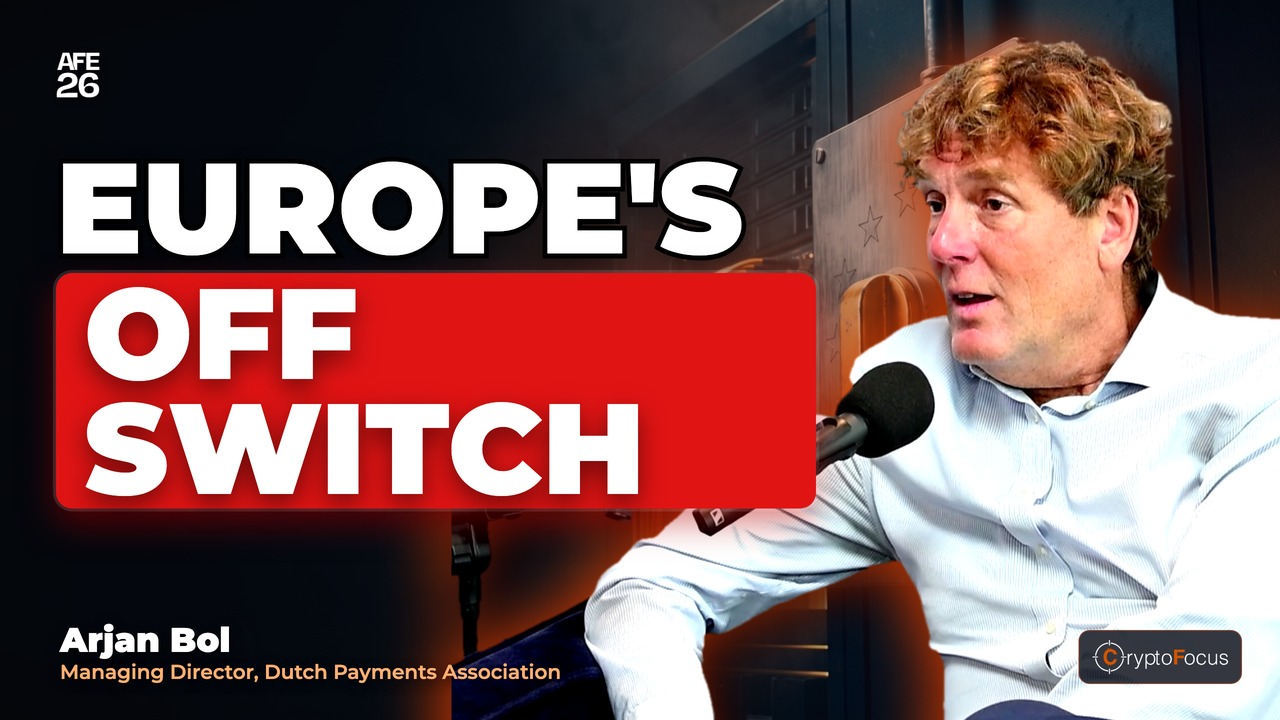

I asked Arjan Bol what the future holds for Dutch payment infrastructure, and he started by telling me it used to be a dull question. Until a few years ago, he said, the future looked a lot like the present, because Dutch payments had spent two decades being the safest and easiest in Europe and nobody saw a reason to redraw them. Then he explained what changed. Within a minute the Managing Director of the Dutch Payments Association was talking about his industry the way a defence ministry talks about its own.
| What you need to know |
|---|
| 1The Dutch Payments Association, Betaalvereniging Nederland, speaks for the regulated providers of collective payment services in the Netherlands: banks, payment institutions and electronic money institutions. Its office runs on around twenty full-time staff, and its board seats three independent members next to six drawn from member firms. |
| 2Bol puts iDEAL at roughly 70 percent of all Dutch e-commerce transactions, and that scheme is now migrating to Wero, the European Payments Initiative wallet already live for person-to-person and online payments in Belgium, France and Germany. The brand trades as iDEAL | Wero today. |
| 3On agentic AI he splits the question in two. Fraud gets easier, and so does commerce. Above 100 euros he still wants to put in a pin code himself, at least for the first few years. |
| 4My read: the organisation that spent twenty years making Dutch payments invisible now budgets for the day that invisibility becomes somebody else's switch to flip. That is a real change in what a payments body treats as its job. |
The full conversation runs just over eleven minutes.
Sovereignty and resilience are now the job
We were sitting across from the breakout rooms at the World Trade Center, an hour before Bol was due to moderate one of the panels. I gave him two minutes to describe the future of Dutch payments. He spent the first thirty seconds explaining why the question had an answer at all now, and the rest naming two words.
sovereignty is important because we, to a large extent, like a lot of other industries, we depend on non-European players. So that means that for certain parts in the payments ecosystem, there is a big vulnerability.
Arjan Bol, Managing Director, Dutch Payments Association
That is a careful sentence from a careful organisation. The association describes itself as a platform where banks, payment institutions and electronic money institutions agree on how Dutch payments work. It does not run a scheme, it does not sell a wallet, and it has no reason to talk down any part of the system it coordinates. When a body like that uses the word vulnerability on camera, the word is doing deliberate work.
The second word was resilience, and he put it plainly: you want alternatives for when something goes wrong. I pushed on that, because the Dutch market already carries more payment options than most European markets, and I wanted to know whether the fallbacks are insurance or clutter.
one would be naive to not have fallback options. At the same time we also know that it’s impossible to have a fallback for every scenario, but at least for the big big risks, as an ecosystem you need to have fallback
Arjan Bol
Note what he did there. He did not promise redundancy for everything, which would have been the easy answer and the one nobody can hold him to. He scoped it to the large risks and left the rest open. That is a resourcing statement as much as a technical one, from an office of roughly twenty people that has to persuade competing banks to pay for the same insurance policy.
Read the thread on X
What happens if the server is switched off
Later in the conversation he reached for an analogy I had not expected, and it is the moment the interview stopped being a trade-body briefing.
it’s a bit like what’s happening with defence. We hope we will not have to fight another war, but we have to make sure that if a war happens, that we prepare for it. It’s a bit like with payments. We hope there will be nobody on the other side of the ocean that will say, turn off the server for Europe, so we can no longer pay at Albert Heijn.
Arjan Bol
Albert Heijn is the detail that makes it land. Not settlement finality, not interchange, not a correspondent banking chain. A supermarket on a Tuesday. The dependency he is describing runs through card networks, processors and cloud infrastructure that are mostly not European, and the failure mode he is preparing for is a decision taken somewhere else rather than a technical fault.
This is where Wero enters. The European Payments Initiative wallet is already live for person-to-person transfers and online payments in Belgium, France and Germany, moving money between bank accounts in under ten seconds, with in-store payments and subscriptions announced. Bol named it and Pay by Bank as the European alternatives he hopes will mature, then immediately declined to pick a winner.
But in the end, we don’t have a specific preference for a certain solution. However, as long as the solution is safe, accessible, I think we will support it.
Arjan Bol
iDEAL is most of Dutch e-commerce, and it has to move
The Dutch problem is not that there is no domestic alternative. It is that the domestic alternative is so dominant that changing it is a national engineering project.
for us it’s very important that the migration from iDEAL to Wero, and iDEAL basically represents 70% of all Dutch e-com transactions. So for us feeling and being responsible for this joint stability in the payment ecosystem, we want to make sure that this migration will go well.
Arjan Bol
That migration is already visible to anyone who checks out online: the scheme now presents itself as iDEAL | Wero, operated by Currence iDEAL. For scale, the association’s own Facts and Figures for 2025 count 347 million online purchases by Dutch consumers, 302.2 million of them inside the Netherlands, against online spending of 35.7 billion euros. Moving the rails under a system that size, while the lights stay on, is the practical content of the word resilience.
I asked him why iDEAL got so big here when no equivalent took hold elsewhere. His answer was about timing rather than technology.
In Germany, there was no ideal. So that’s why in Germany, 80% of e-com transactions is done with PayPal. So just like we grew up in Ecom with Ideal in Germany, they grew up with PayPal.
Arjan Bol
Dutch shoppers started buying online around twenty years ago, which is when iDEAL launched, so a bank-account payment became the normal way to pay. German shoppers arrived at the same moment with no domestic scheme waiting, and a US wallet became the default instead. Payment habits form once and then sit there for a generation. That is the argument for getting the Wero transition right the first time, and it is also, read the other way, the clearest illustration of the dependence he opened with.
A payment is a necessary evil
New entrants keep arriving in the Dutch market, and I wanted to know how an association responsible for stability reads that. His answer was the most quotable thing he said, and the least flattering to his own industry.
let’s face it, for a consumer, a payer, a payment is a necessary evil. You don’t want to pay. You prefer to leave the shop without paying.
Arjan Bol
From there he drew the conclusion that every payments pitch deck quietly ignores. More ways to pay do not produce more paying.
I will only buy one pizza, because I can only eat or afford one pizza.
Arjan Bol
Think about what that does to the economics of the next five years. The transaction pool is fixed by what people can eat and afford, and the number of schemes competing for each transaction is rising. He called it an interesting struggle for the same transaction in the years to come, which is a polite way of saying that several of the wallets launching into Europe right now are competing for volume that does not exist yet and will not appear because they arrived.
Agentic commerce, and where he still wants a pin code
Agentic AI ran through the whole programme at this event, so I put it to him directly. He took the threat first.
Of course, with AI, it’s also easier to initiate and implement fraud.
Arjan Bol
Then the opportunity, with a boundary attached. He is happy for an agent to hunt down a pair of shoes below a price he sets, or to book a flight and hotels for three days in Rome. He is less happy to hand over the authorisation.
I personally think, but maybe I’m a bit old fashioned, that if it’s above 100 euros I still somewhere want to put my fingerprint or my pin code
Arjan Bol
A hundred euros is a specific number from a man whose association runs the fraud forum for Dutch payments, and it is worth holding on to as the agentic payment standards arrive. The threshold is where the liability argument will happen. His second point was sharper still, and it is the line I would put to every agentic commerce pitch this quarter.
That was called Internet of Things a few years ago. Now it’s called agentic commerce.
Arjan Bol
He was describing the fridge that reorders milk, a demo that has been touring conferences for a decade under at least two names. Some of what is sold as agentic commerce really is new, because an agent that negotiates and authorises is not a sensor that reorders. Plenty of it is the older idea with a fresh label, and the man coordinating Dutch payment standards is not in a hurry to rebuild the rails for a demo he has already seen.
What he wants people to take home
Near the end I asked what changes if the shifts to the east and the west keep going. His answer separated the plumbing from the life it supports.
But those are the means that are changing, not the actual needs being on a terrace and enjoying a cup of coffee with a friend.
Arjan Bol
It is a reassuring framing, and it is also the reason this work is hard to fund. Nobody notices payment infrastructure until it stops, so the case for a second set of rails has to be made entirely in advance, against a cost that is certain and a risk that is not. That is exactly the shape of the defence argument he borrowed, and he knows it.
I closed by asking what he wanted the people walking the floor at the Amsterdam Fintech Event to leave with.
I hope that they will walk away with the idea that Amsterdam is a real hub for fintech
Arjan Bol
On the evidence of the room he said it in, that is not a stretch. The more useful takeaway is the one he gave earlier without being asked: the Dutch spent twenty years making payments invisible, and the next few years are about making sure the invisible part still belongs to them.
Read next
- Every interview and report from the event sits on our Amsterdam Fintech Event hub.
- Our preview of the event, with Bryan Verhage of co-organiser Cognito on how the programme was built: one room, 300 people.
- Job Mantz of the Holland Fintech Association on what the organiser wants this edition to do: the organiser’s view.
- The Dutch Payments Association: betaalvereniging.nl.
I recorded the interview with Arjan Bol at the World Trade Center Amsterdam on 7 October 2026. Quotes are verbatim, with filler removed. Cryptofocus is a media partner of Amsterdam Fintech Event 2026. Nothing here is financial advice.


