



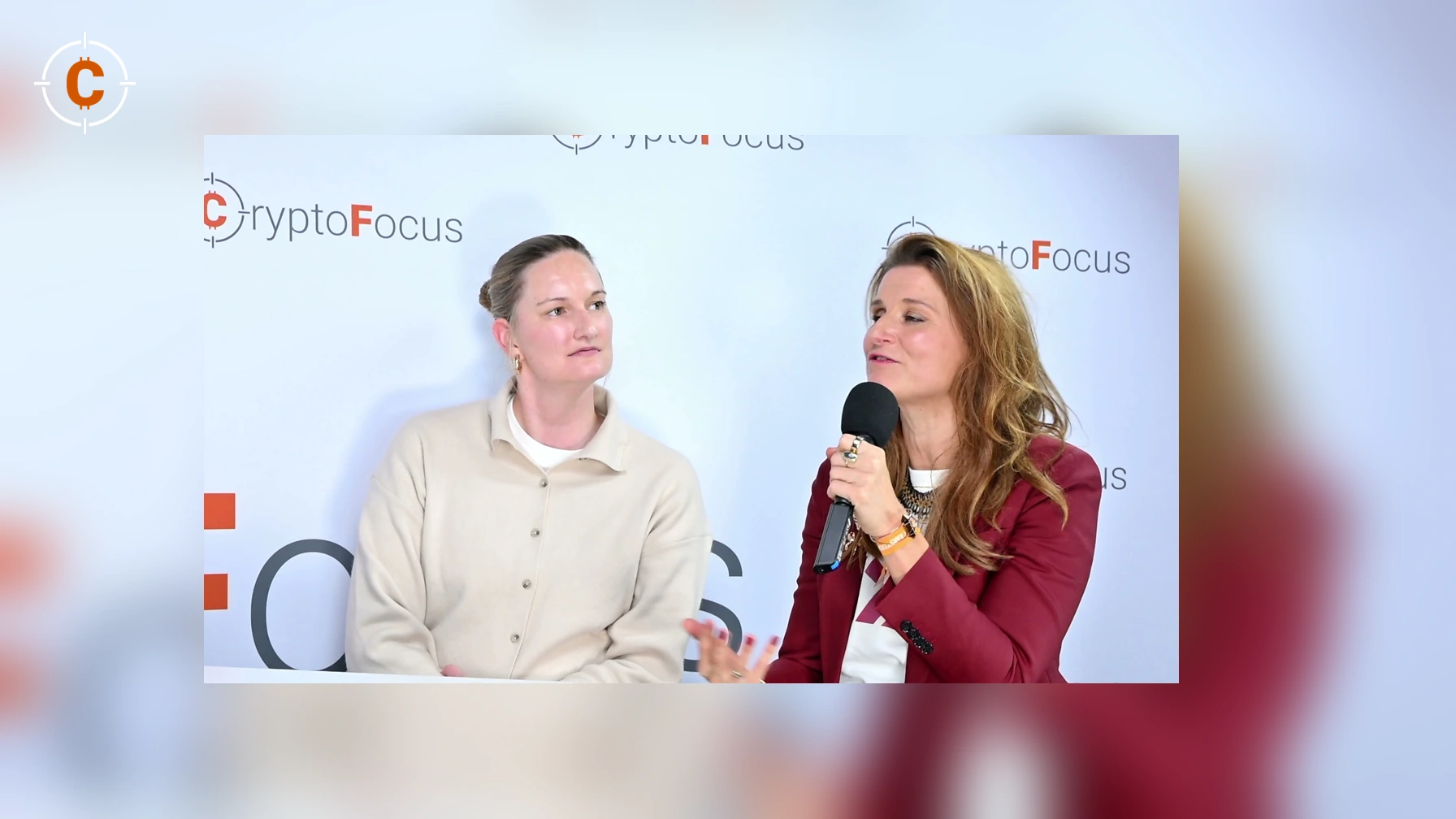
Lisanne Drost’s main lesson from the survey her community ran this year fits in one line: “a trusted conversation with people you know beats a thousand ads.” She and Laura Peijs co-founded Crypto Women Collective, and I interviewed them together at Bitcoin Amsterdam, at the SugarFactory in Halfweg, on 5 November, the day the collective turned one. It launched at the same conference a year ago, and this time the founders came back with a survey and a list of more than 40 women who speak on crypto.
| What you need to know |
|---|
| 1Laura Peijs and Lisanne Drost are the co-founders of Crypto Women Collective, a community for women who work in crypto or are curious about it. It launched at Bitcoin Amsterdam a year ago and turned one at this year's edition. |
| 2Lisanne says a trusted conversation with people you know beats a thousand ads. In the collective's survey of 253 people, 60 percent of those who had never owned crypto said a recommendation from someone they trust would help them start. |
| 3Laura says the free Speaker Index, launched about two months before the event, lists more than 40 women who speak on crypto, and the collective shares it with media and event organisers. |
| 4My read: the Speaker Index is the most practical thing the two have built this year, because it answers an organiser's oldest excuse with a list of names. |
The full interview is just over 19 minutes long, and you can watch it here.
Early in the recording I thanked Laura, because she is one of the main reasons Cryptofocus has its space at this event and a place on its stage. Laura also runs communications and marketing at Treasury, the bitcoin treasury company whose founder and CEO, Khing Oei, writes a regular bitcoin column for Cryptofocus. She told me the story of how the collective began when we spoke at Money20/20 Europe in June. This time I wanted to know what a year of building had taught them.
A trusted conversation beats a thousand ads
When I interviewed Lisanne at Dutch Blockchain Week, she talked to me about education. This time she had research behind it. Crypto Women Collective published its Crypto Adoption Index 2026 in October, and she explained why they ran it at all. Most research looks at wallets and transactions, she said.
we really wanted to know the human side behind it.
Lisanne Drost, co-founder, Crypto Women Collective
The line about trust was the main thing for her. In her words, “advertisement don’t get people into crypto”, and for adoption, community and talking about crypto with people you trust “is essential”. That is why she thinks a community matters so much for adoption. The figures in the full report point the same way. In all, 253 people, most of them in the Netherlands, answered an anonymous online questionnaire between 11 June and 7 October. Among those who had never owned crypto, 60 percent said a recommendation from someone they trust would help them start, and 2 percent named traditional media. Cryptofocus helped spread the questionnaire, and I went through the report page by page for an earlier article in Dutch.
Education still sits at the centre of what she does. In the research, she said, it came out as something that “is way more important than ads or regulation”, and the way to teach it, in her words, is “low barrier, no jargon”.
community is key for the education part because people learn by people they trust.
Lisanne Drost
For anyone who already holds bitcoin, that reads as a job description. If people learn from people they trust, the best onboarding tool this industry has is a holder who will sit down with a friend or a colleague and explain it without jargon. No campaign budget buys that.
Read the thread on X
A list that retires an old excuse
Laura described the collective’s other big project of the year in a single sentence.
the speaker index is a free accessible list of women who speak on crypto.
Laura Peijs, co-founder, Crypto Women Collective
It covers anything from privacy and policy to trading and institutional adoption, she said. The Speaker Index lives on the collective’s website, it is open to everyone, and putting yourself forward is simple. The collective shares the list with media and with event organisers, and Laura was frank about why.
the anecdote of, well, we couldn’t find any women. Well, that doesn’t work anymore. You definitely can.
Laura Peijs
The response took the founders by surprise as well. The index launched about two months ago, Laura said, it has already reached all the way to Australia, and it now holds more than 40 women. People put themselves forward, recommended friends and recommended experts they had seen. She told me about two people in the Cayman Islands who had never met and found each other through the list. Laura expects it to grow again after the gathering the collective hosted on the first day of the event, which Bitcoin Amsterdam gave them the space for, the founders told me.
I put it to her that the women who get noticed on crypto social media are too often the ones chasing attention, and asked how the index keeps its focus on expertise people can trust. She would not judge anyone: every woman can position herself the way she wants, she said, and the collective is filling a niche the two founders saw as an opportunity.
didn’t recognize ourselves in the industry. It felt a little bit lonely.
Laura Peijs
For a conference programme team, the index turns a complaint into a working tool. A list of more than 40 names, each with an area of expertise, is something a booker can open while a programme is still being planned.
Lean in when politics sways
Laura travels a lot between Europe and the US, so I asked her whether the political noise in Washington is a reason for women to stay away from the industry for now. She would not call it a moment for shying away. “It’s more lean in,” she said, and she sees the opening in Europe in particular, in regulatory dialogue and policy.
Regulators and politicians are still working out how to fit crypto companies into boxes that were not built for them, she said. Her advice is to understand where they are coming from and not to get frustrated.
not using it as a place of frustration, but as a place of opportunity.
Laura Peijs
The collective will spend more time on that next year, Laura said, with members who already work in policy, some of them in Brussels, lobbying on crypto adoption. For bitcoiners in Europe this is the part with consequences. MiCA already shapes how crypto service providers work here and DAC8 brings tax reporting on crypto, and the next rules will come from the same regulators and politicians she wants the industry to understand. Her conclusion was short.
These things are going to happen. I think political does sway, but it’s time to lean in and I think lean in further and with more conviction.
Laura Peijs
Two founders who met three weeks before the start
Near the end, Laura told me how little time she and Lisanne had known each other when they started.
Lisanne and I only met three weeks before we set up Crypto Women Collective.
Laura Peijs
People would think they were crazy, Laura admitted, and so far it has worked. She has learned a lot from Lisanne about communication, she said, and the two of them balance each other out. The hard part is one every small team knows. Some days they look at each other and agree to take a step back, because “we’re only two people”, even with council members, ambassadors and volunteers around them. Laura made a point of crediting Lisanne for the survey, which took hours of work: “It’s not a light piece of work to do on the side of a full-time job.”
At our last interview, Lisanne told me there are never lines at the women’s restroom at crypto events. That day I walked past one with a line. She would not take credit for it and said the whole industry is paying more attention to women. When I asked what she hopes they will have done a year from now, she counted the room. About a hundred women came to the collective’s gathering this year, she said, and she wants twice as many next year.
today there were a hundred so next year two hundred and a line for the restrooms as well
Lisanne Drost
Her wider hope is about the community itself: “So I hope we can be that community for the women working in crypto but also curious about crypto.” If you book speakers for a crypto event, or you speak on crypto and are not on the list yet, the Speaker Index is the place to start.
Read next
- All our Bitcoin Amsterdam 2026 interviews and coverage, updated as each conversation goes live.
- Our earlier conversation with Laura Peijs at Money20/20 Europe, on the moment that led her to start the collective.
- In Dutch: CWC-onderzoek: bij een eerste cryptostap telt een vertrouwd gezicht, my reading of the Crypto Adoption Index 2026.
- Kelly Ann Collins of SheCrypto, whom I also asked about Lisanne’s washroom observation, on why many women may already be in crypto, just unseen.
- Justin Doochin of BTC Inc, whose company runs the conference, on why the people in the room matter as much as the programme.
- Fred Forsberg of Bitcoinist on why a mining app comes to meet its users in person.
- Oleg Andreev of Safely on Flame, a network secured by burning bitcoin, and Martin Masser of ChangeNOW on why the Binance incident barely moved bitcoin.
- Lyudmyla Kozlovska of the Open Dialogue Foundation on why privacy tools are a plan B, even inside the West.
- Crypto Women Collective is at cryptowomencollective.com, on LinkedIn and @CryptoWomenCo on X. Laura Peijs is @laurapeijs on X.
I recorded the interview with Laura Peijs and Lisanne Drost at Bitcoin Amsterdam 2026, at the SugarFactory in Halfweg, on 5 November 2026. Quotes are verbatim, with filler removed. Cryptofocus is a media partner of Bitcoin Amsterdam 2026; I moderated a panel there on 5 November and am the MC of the Orange Stage on 6 November. Nothing here is financial advice.


